Cart
0
You may also like
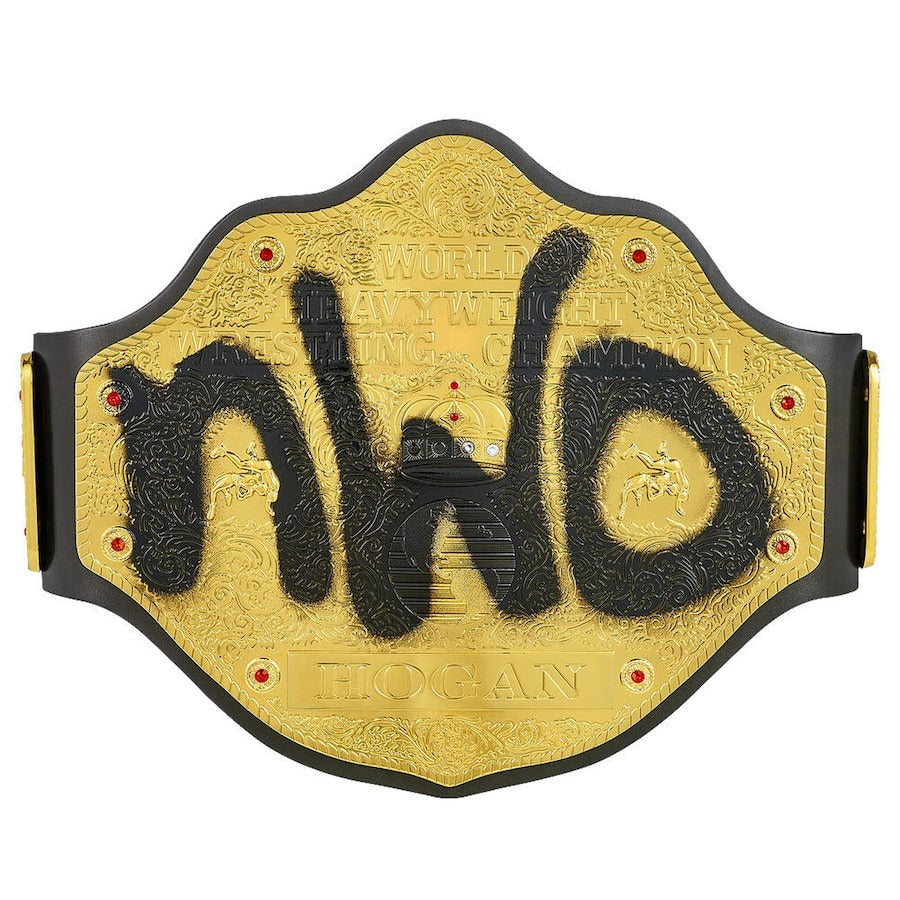
''Hollywood'' Hulk Hogan nWo Signature Series Championship Replica Title Belt
On sale from $140.00
+ Add to Cart


You may also like

There's a specific feeling that comes with a championship belt that has your name on it. Your logo. Your colors. It's different from any off-the-shelf trophy or generic plaque, because it wasn't made for anyone else.
Custom title belts have become the go-to award format for fantasy sports leagues, youth tournaments, corporate recognition programs, podcast milestones, and wrestling collectors who want something nobody else has. The reason is simple: a belt you designed yourself carries a story. Anyone can buy a trophy. Not everyone has a belt made for them.
This guide walks you through every customization decision you'll make when designing your own custom title belt, what each option means, how the choices interact, and what to think about before you place your order.
When you design your own Championship Belt, you control six things:
Strap Color — the leather base that holds the whole belt together
Plate Color — gold or silver finish across the zinc plates
Center Logo — your artwork, name, or design on the main centerplate
Left Side Plate — the plate that flanks the centerplate on the left
Right Side Plate — the plate that flanks the centerplate on the right
Plate Thickness — 4mm, 6mm, or 8mm, which determines physical depth and presence
These six decisions combine to produce a completely unique belt. Each one matters, and each one affects how the others look. The sections below cover them in order, the same order you'll encounter them when you configure your belt.
The strap is the leather base that runs behind and around the plates. It's what the recipient actually buckles around their waist, and it sets the visual tone for everything that sits on top of it.
Most custom belts are available in black or white straps, and those two options cover the majority of what people actually need. Black reads as bold and classic — it's what you picture on a WWE superstar walking to the ring under arena lights. White reads as cleaner and more modern, which is why it works particularly well for corporate awards and sporting events where the overall presentation needs to feel polished rather than theatrical.
The strap color should be your first decision because it anchors everything else. A gold-plated centerplate on a black strap creates sharp contrast and looks commanding. The same plate on a white strap reads differently — brighter, more formal, almost ceremonial. Neither is wrong. They just create different impressions, and the impression you want should drive the choice.
Plate color refers to the metallic plating finish applied to the zinc centerplate and side plates. The two standard options are gold and silver (sometimes called nickel), and they communicate different things.
Gold plating is the classic choice. It's what most people associate with championship hardware — the kind of finish you see on major wrestling titles and high-profile sports trophies. Gold photographs exceptionally well, catches light dramatically, and signals prestige immediately. If the person receiving this belt is a wrestling fan, or if the event has any theatrical element to it, gold is almost always the right call.
Silver plating is cleaner and more understated. It reads as contemporary and professional rather than dramatic. For corporate awards, academic recognition, or any context where the audience might find gold too flashy, silver lands better. It still looks premium — the material quality is the same — it just communicates it differently.
One practical note: the plate color you choose applies across the centerplate and side plates. This consistency is what makes the belt read as a single designed object rather than a collection of separate parts.
Ready to see your options in one place? Lets start design your own custom title belt today.
The centerplate is the large main panel at the front of the belt. It's the element people see first, photograph most often, and remember longest. Your center logo is what goes on it.
This is the most personal part of the entire design process, and it's also where most people have the most questions.
What can go on the center logo?
Almost anything that can be rendered as a graphic: a sports team logo, a company emblem, a personal crest, an event name in large bold lettering, a character illustration, or a combination of text and imagery. The key constraint is that the artwork gets translated into physical raised and recessed surfaces on a zinc plate, so the design has to work in that format.
What artwork works best?
Bold, high-contrast designs engrave cleanly. A strong logo with defined edges, clear shapes, and readable text will translate beautifully into the zinc casting. Fine detail, thin lines, gradient effects, and photographic images do not transfer well — the casting process smooths out complexity that exists only in pixels.
If you have a vector file (SVG, AI, or EPS format), that's ideal. A high-resolution PNG with a transparent background also works well in most cases. If your artwork needs to be simplified or redrawn for the plate format, a good manufacturer will flag this during the proofing stage.
Text on the centerplate
If your center logo is primarily text — a name, a title, a year — keep it large and legible. Championship belts are not the place for small type. A single line of bold text centered on the plate reads far more powerfully than three lines of smaller text competing for space.
The side plates are the two smaller panels that sit directly to the left and right of the centerplate. They frame the main design and give you space to add supporting detail without crowding the centerplate.
What goes on side plates?
Side plates are where you put the information that matters but shouldn't dominate. Common examples:
The recipient's name (left plate) and the event or title (right plate)
The year or date on one side, a team name or tagline on the other
A logo variation or decorative element that echoes the centerplate theme
The league or organization name
You don't need to fill side plates with text. A clean decorative border, a simple star motif, or an emblem that complements the centerplate can be equally effective. Sometimes restraint on the side plates makes the centerplate hit harder by comparison.
Left and right should feel connected
The most common mistake on side plates is designing each one in isolation. The finished belt will show all three plates simultaneously, so the left and right need to read as part of the same design system as the centerplate. If your centerplate uses a bold, blocky aesthetic, the side plates should echo that. If the centerplate is circular with curved border elements, sharp geometric side plates will look out of place.
Think of the three plates as panels in a triptych. Each one carries its own content, but they should share enough visual DNA that the whole thing reads as unified.
Plate thickness is the decision that most first-time buyers give the least thought to, and it's the one that most dramatically affects how the finished belt feels in person.
The plates are cast from zinc alloy — the industry standard material for quality championship belt hardware. Zinc takes fine engraving detail well and accepts gold and silver plating cleanly. The thickness options (4mm, 6mm, and 8mm) refer to the depth of the cast plates, and even a few millimeters changes the entire character of the piece. For a full comparison of how each thickness performs, the guide on 4mm vs 6mm vs 8mm championship belt plates covers the differences in practical detail.
4mm — Lightweight and Accessible
A 4mm plate sits relatively flat. It looks clean and holds good surface detail, but it doesn't have the dimensional, raised-edge quality of thicker plates. For youth awards, casual gifts, bulk event orders, or any situation where cost is the primary constraint, 4mm is a sensible choice. It looks like a championship belt. It just doesn't feel like one in the same way the thicker options do.
6mm — The Most Popular Choice
Six millimeters is where most buyers land. The plates carry noticeably more depth than 4mm, engraved detail pops more sharply under light, and the overall weight feels substantial without being heavy. For collectors, sports event awards, fantasy league championships, and fans who want something that genuinely impresses on display or in photos, 6mm is the right balance of quality and value.
8mm — Maximum Presence
An 8mm plate has real weight and commanding visual depth. The raised edges and engraved elements catch light in a way that thinner plates simply can't replicate. If you're designing a premium display piece, an executive-level award, or a belt where quality is the entire point, 8mm is worth the additional investment. The difference is immediately obvious the moment you hold one.
Not sure which thickness is right for your situation? Start building your belt at the Design Your Own custom title belt collection — all three thickness options are available to configure directly.
If you're wondering whether a custom belt makes sense for what you have in mind, here's an honest picture of who actually orders them:
Fantasy sports commissioners who want an award that creates genuine excitement during draft or championship night — something the winner actually wants to defend the following season.
Youth sports coaches and event organizers running tournaments, skill competitions, or end-of-season celebrations where a belt lands with far more impact than a standard trophy.
Corporate teams using custom belts as employee recognition awards — sales champion, team MVP, customer service excellence — where the format is memorable precisely because it's unexpected.
Wrestling collectors building personal collections around custom or original designs, often tied to specific matches, eras, or personal milestones in their fandom.
Content creators and streamers who use a custom belt as a branded prop, a subscriber milestone award, or a community giveaway prize.
Gift buyers looking for something genuinely memorable for a wrestling fan who already has the standard replicas and wants something nobody else has.
If your use case fits any of those descriptions — or something adjacent to them — a custom title belt will land the way you're hoping it will.
A custom championship belt is not a simple product. The six decisions you make — strap color, plate color, center logo, left side plate, right side plate, plate thickness — interact with each other in ways that aren't always obvious upfront.
A gold plate looks different on a black strap than on a white one. An 8mm plate with a complex logo reads completely differently than the same logo at 4mm. Side plates that were designed without reference to the centerplate make the finished belt look like three separate things sitting next to each other rather than one cohesive piece.
The buyers who are happiest with their custom belts are the ones who thought through the full design before uploading anything — who considered how each element sits relative to the others, and who kept their artwork clean and bold enough to engrave well.
Take your time with the proof. When a manufacturer sends you a digital mockup before production, treat it seriously. Check every word, confirm every design element, and verify that the combination of strap color, plate color, and artwork looks the way you intended. Changes caught at proof stage cost nothing. Changes discovered after production are a different conversation.
Designing a custom title belt is a genuinely rewarding process when you go in prepared. You have six decisions to make — strap color, plate color, center logo, left side plate, right side plate, and plate thickness. Each one is straightforward on its own. The skill is in making them work together as a complete design.
Get the strap color right first, because everything else sits on top of it. Choose your plate color based on the impression you want to make, not just personal preference. Keep your center logo bold and clean. Use the side plates to frame and support the centerplate without competing with it. And choose your plate thickness honestly — 6mm covers most buyers well, 8mm is worth it if quality is the priority.
When all six decisions align, the result is something the recipient will hold onto for years. That's the point of a custom belt. It's not just an award. It's the one that was made for them.
Start designing your custom title belt today and see every option available to configure.


Bring home the glory of your favorite champions. Explore premium replica belts with detailed plates, durable leather, and an authentic championship feel.
👉 Shop WWE Replica Belts


