Cart
0
You may also like
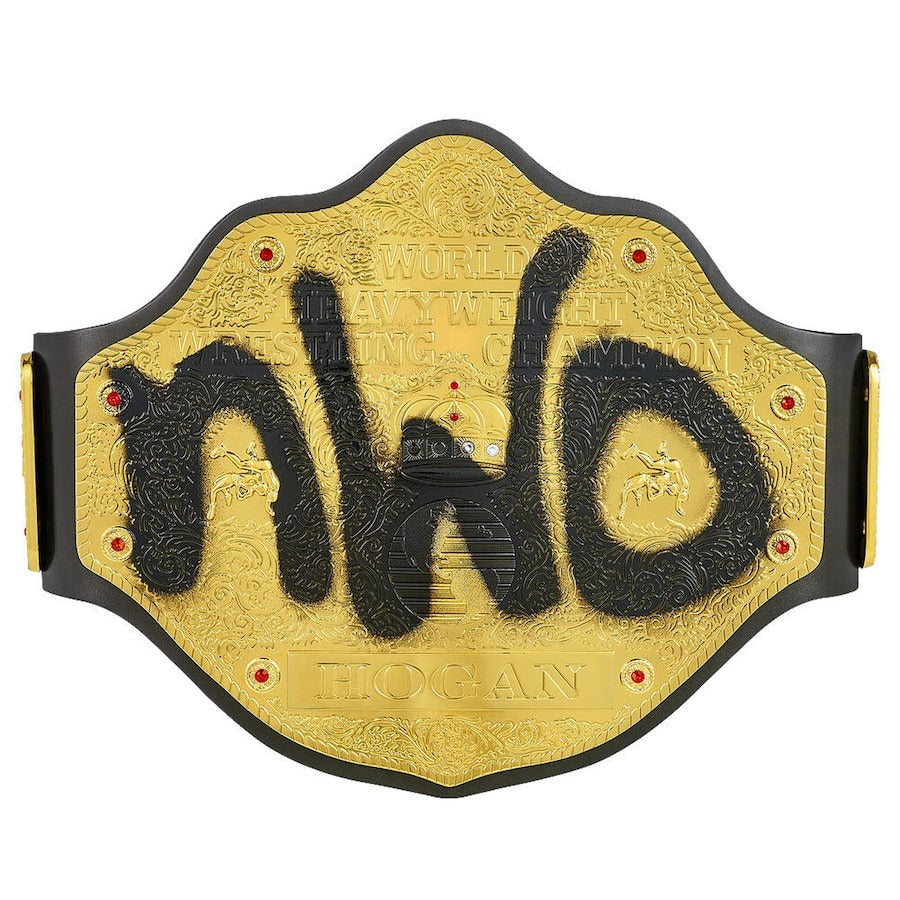
''Hollywood'' Hulk Hogan nWo Signature Series Championship Replica Title Belt
On sale from $140.00
+ Add to Cart


You may also like

If you have watched professional wrestling for any length of time, you already know that a championship belt is more than a prop. It is the physical proof of who runs the show, who clawed their way to the top, and who the audience believes in on any given night.
The history of WWE championship belts stretches back more than six decades and tells a story that mirrors professional wrestling's own unlikely rise from regional carnival attraction to a global sports entertainment phenomenon. I have spent years researching wrestling history and championship design, and in this guide I want to give you more than just a dry list of title changes. I want to walk you through how these belts actually evolved, why certain designs were chosen, what business decisions drove their redesigns, and what these titles genuinely meant to the men and women who carried them.
Whether you are a lifelong fan, a collector looking to understand what you are buying, or someone who just caught their first WrestleMania and wants to understand what all the fuss is about, this guide is written for you.
The story begins in 1963 when Buddy Rogers became the first recognized World Wide Wrestling Federation Heavyweight Champion after the promotion split from the National Wrestling Alliance. Rogers held the title briefly before losing it to Bruno Sammartino on May 17, 1963. What followed was one of the most remarkable championship reigns in wrestling history — 2,803 consecutive days as champion. Nearly eight years. That number still staggers the mind when you sit with it.
The belts from this era were simple, honest pieces of leather and gold-toned metal. There was no corporate design team involved. These were crafted by independent belt makers, and the aesthetic reflected the blue-collar, athletic culture of the sport at the time. The early WWWF championship featured a globe design on the main plate, a motif that would return repeatedly throughout WWE history as a symbol of worldwide dominance.
What is worth appreciating about this period is that the belt actually meant something specific in geographic and promotional terms. The WWWF title was a Northeastern American championship. The NWA had its own world title. The AWA had theirs. Fans understood these distinctions. So when a man walked into Madison Square Garden carrying that globe-adorned leather strap, New York audiences knew exactly what they were looking at and exactly how hard it was to hold.
After Sammartino's historic first reign ended in 1971, the title passed through the hands of Ivan Koloff, Pedro Morales, Stan Stasiak, and eventually back to Sammartino for a second reign. Billy Graham won it in 1977, introducing a flashier, showman aesthetic that would influence the next generation of champions. Bob Backlund then held the title from 1978 through most of 1983, representing the last of the old-school scientific wrestling champions before the entertainment era arrived.
If you want to explore the full range of replicas from this foundational era, Championship Belts Online carries designs that honor the craftsmanship of these early titles.
The arrival of Hulk Hogan in 1984 changed everything. Vince McMahon's national expansion required a championship title that looked like it belonged on mainstream television, not just at regional arenas in the Northeast. The belt design evolved through the 1980s to match the growing spectacle of the product.
The moment that most wrestling historians point to as the design high point came in 1988 with the introduction of the Winged Eagle championship. Crafted by legendary belt maker Reggie Parks, this title features an eagle with fully spread wings dominating the main plate, flanked by two side plates and finished with a dark brown leather strap. It is, by almost any measure, the most beautiful championship design in wrestling history. Fans who grew up in this era remember exactly how it looked under arena lights, and that memory has never really faded.
The Winged Eagle was carried by Hulk Hogan, Randy Savage, The Ultimate Warrior, Bret Hart, Shawn Michaels, and Steve Austin. Each of those names represents a different chapter in WWE's story, and the belt connected all of them across a decade-long lineage. That is genuinely rare in championship design — a piece that transcends the individual champions who hold it while still feeling personal to each of them.
You can explore our full collection of WWE championship belt replicas, including designs inspired by this legendary Winged Eagle era, if you want to add a piece of this history to your collection.
By 1998, WWE was in the middle of the Monday Night Wars with WCW, and the product had shifted dramatically in tone. Steve Austin drinking beer and giving the middle finger to his boss was the defining image of the era, not Hulk Hogan flexing for children. The championship design followed suit.
The Attitude Era title — sometimes called the Big Eagle belt — introduced a larger, more imposing main plate with a scratched WWE logo replacing the classic design. The leather was wider, the proportions were bigger, and the whole piece felt more aggressive and television-ready than the elegant Winged Eagle it replaced. It was a belt designed for an era that valued excess and attitude over tradition.
What is interesting in hindsight is how well this design actually held up. The Attitude Era title does not age as gracefully as the Winged Eagle, but it carries enormous emotional weight for fans who watched Steve Austin, The Rock, Mankind, Triple H, and Kurt Angle make it famous during the most commercially successful period in wrestling history. Sometimes historical significance matters more than design purity, and this belt has that significance in abundance.
The Attitude Era belt remained the primary title through the brand split of 2002, when the Raw and SmackDown brands each received their own world championship, and separate designs became necessary to distinguish them.
Few moments in championship belt history generated more passionate debate than John Cena's decision to redesign the WWE title after winning it in 2005. The resulting spinner belt — featuring a WWE logo that literally spun on the main plate — divided fan opinion immediately and continues to do so today.
Critics called it gimmicky and inappropriate for a world championship. They argued that a title with a mechanical novelty feature could not carry the same gravitas as the Winged Eagle or even the Attitude Era design. Defenders pointed out that it perfectly matched Cena's hip-hop character and became one of the best-selling pieces of wrestling merchandise in the company's history.
Both sides were essentially correct. The spinner belt was a commercial triumph and an aesthetic controversy at the same time. What it really demonstrated is that championship design is always a business decision as much as an artistic one. The belt sold in quantities that more traditional designs could not match. For a publicly traded entertainment company, that matters.
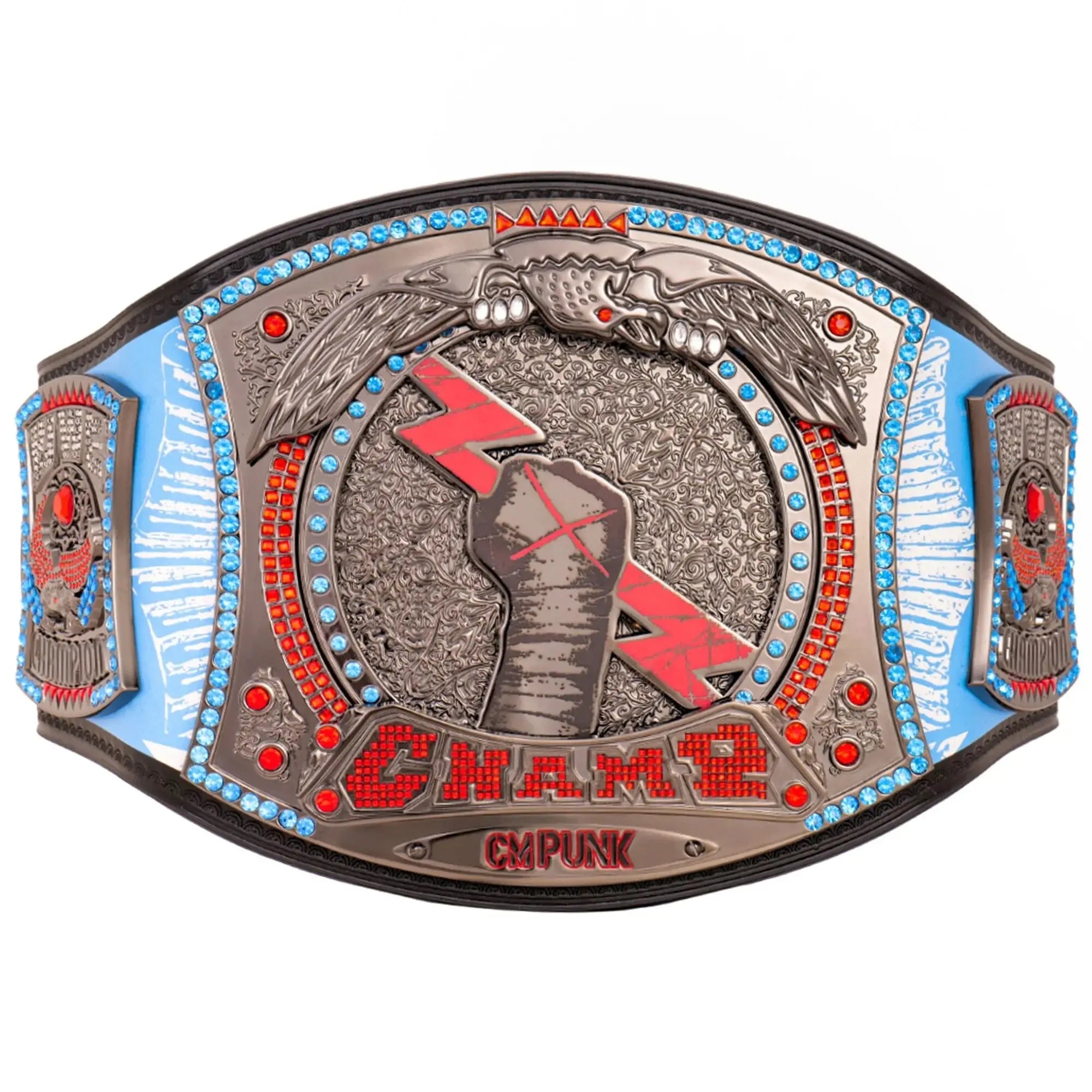
The spinner era's reputation improved slightly when CM Punk began his celebrated 434-day title reign in 2011. Punk's character — a man who openly criticized WWE's corporate direction and positioned himself as a legitimate alternative to the company's preferred stars — gave the belt an unexpected layer of irony. He was carrying the most merchandise-friendly title in company history while openly mocking the corporate priorities that had created it. That contradiction was actually pretty interesting as a piece of wrestling storytelling.
The spinner design was retired in 2013 when WWE introduced a cleaner, more refined title ahead of the championship unification the following year.
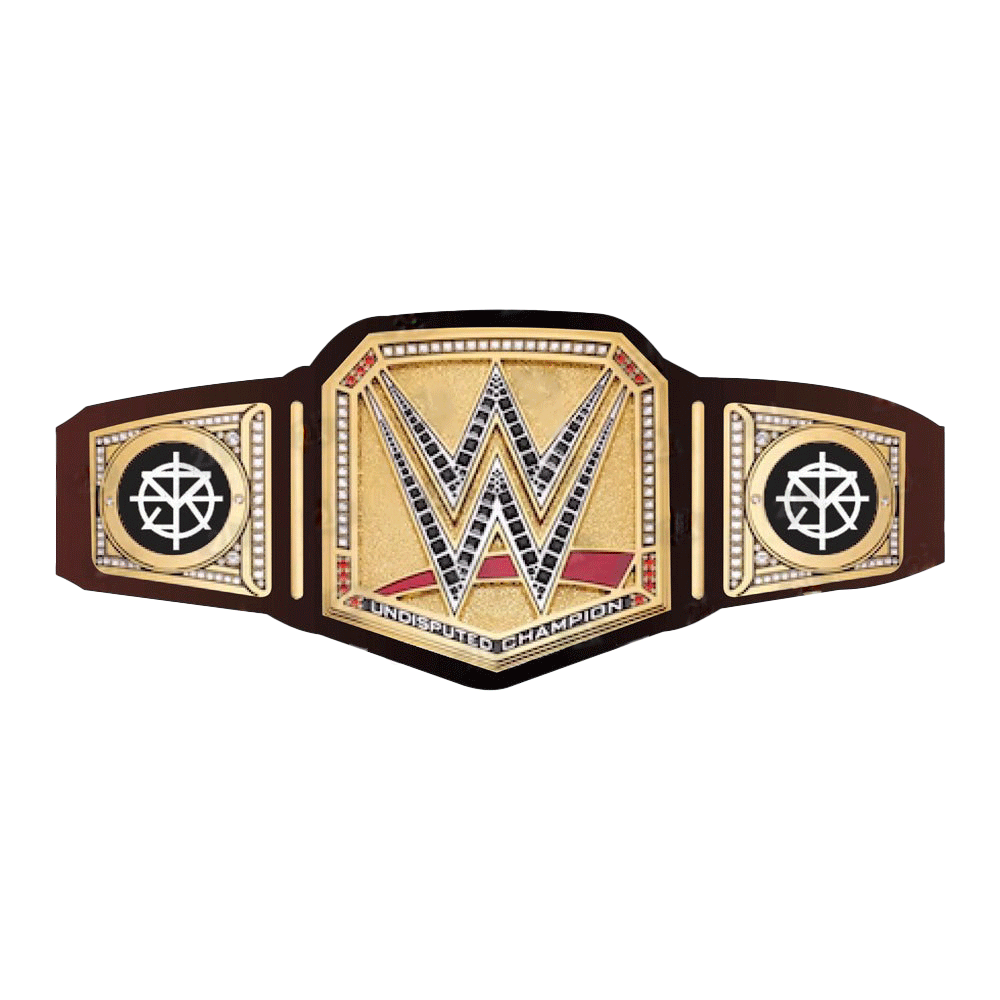
The current visual era of WWE championship design began in 2014 when the company unified its two world titles into a single championship. The resulting belt featured a refined central plate with a clean WWE logo, customizable side plates for each champion, and — for the first time in the title's history — a white leather strap.
The white strap was polarizing initially, as any significant departure from tradition tends to be. But it established a genuinely distinctive look that has since become one of the most recognizable championship designs in contemporary wrestling. The custom side plates were the genuinely clever innovation here. When a champion wins the title, the generic side plates are swapped for ones bearing that champion's personal imagery or logo. When the title changes hands, the ceremony of swapping the plates becomes part of the storytelling. It is a simple design decision that serves the narrative well.
Roman Reigns' record-breaking Universal Championship reign, which ran from August 2020 through the spring of 2023 and covered approximately 1,316 days, gave this era of championship design its defining image. The Tribal Chief character and the Undisputed title became inseparable in the cultural memory of that period, which is exactly what a great championship storyline is supposed to accomplish.
Today's championship landscape also includes the revived World Heavyweight Championship as a separate SmackDown title, meaning WWE currently operates with multiple distinct world-level designs simultaneously. This creates more visual variety in the product and more opportunities for distinctive championship moments.
For wrestling fans who grew up watching these championships change hands across generations of superstars, owning a replica belt is one of the most tangible ways to connect with the sport's history. The quality available to collectors today is substantially better than what existed a decade ago, and the range of options has expanded significantly.
A few things are worth understanding when you are evaluating replica championship belts. First, the quality difference between entry-level replicas and premium collector pieces is real and significant. The stitching on the leather, the weight and finish of the metal plates, the accuracy of the design details — these all vary considerably across price points, and you will feel that difference when you hold the finished piece.
Second, historical accuracy matters to serious collectors. A replica that faithfully reproduces a specific era's championship — the correct side plate design, the accurate leather color, the right plate dimensions — carries more value to a knowledgeable collector than a generic approximation that captures the general vibe without the specific details.
Third, if you want something that goes beyond reproduction and becomes genuinely personal, a custom design allows you to use championship history as inspiration while creating something that reflects your own story. Our custom belt design service lets you work through those choices with real attention to the details that matter.
At Championship Belts Online, we focus on combining historical accuracy with quality materials, which is why both collectors and fans come back to us for pieces they are genuinely proud to display.
What was the very first WWE championship belt and who designed it?
The first recognized WWWF Heavyweight Championship belt was introduced in 1963 when the promotion separated from the NWA. The early designs were crafted by belt maker Reggie Parks, who went on to create some of the most iconic wrestling championship designs in history, including the celebrated Winged Eagle belt. The earliest designs featured a globe motif on the main plate, reflecting the championship's claim to worldwide recognition.
Which WWE championship design do most fans and historians consider the best ever?
The Winged Eagle championship, introduced in 1988 and used through 1998, consistently tops fan polls and historian rankings as the greatest WWE title design. The spread-eagle main plate, the dark leather strap, and the elegant proportions of the piece have aged beautifully. Its association with Hulk Hogan, Randy Savage, Bret Hart, Shawn Michaels, and Steve Austin gives it enormous historical weight on top of its visual qualities.
How long was the longest WWE championship reign in history?
Bruno Sammartino's first WWWF championship reign lasted 2,803 days, from May 17, 1963, to January 18, 1971. That is nearly eight consecutive years, a record that is essentially impossible to match in the modern era. Roman Reigns' Undisputed Universal Championship reign, which ran from August 2020 to April 2023, was the longest in the modern era at approximately 1,316 days.
Are WWE replica championship belts worth collecting?
For wrestling fans, replica championship belts are among the most meaningful collectibles available because they connect directly to the stories and performers that shaped the sport for them. Quality varies enormously, so investing in replicas that accurately reproduce a specific era's design with quality materials is worth the additional cost. A well-made Winged Eagle or Attitude Era replica is something you will display with genuine pride. You can explore quality WWE championship belt replicas


Bring home the glory of your favorite champions. Explore premium replica belts with detailed plates, durable leather, and an authentic championship feel.
👉 Shop WWE Replica Belts


